
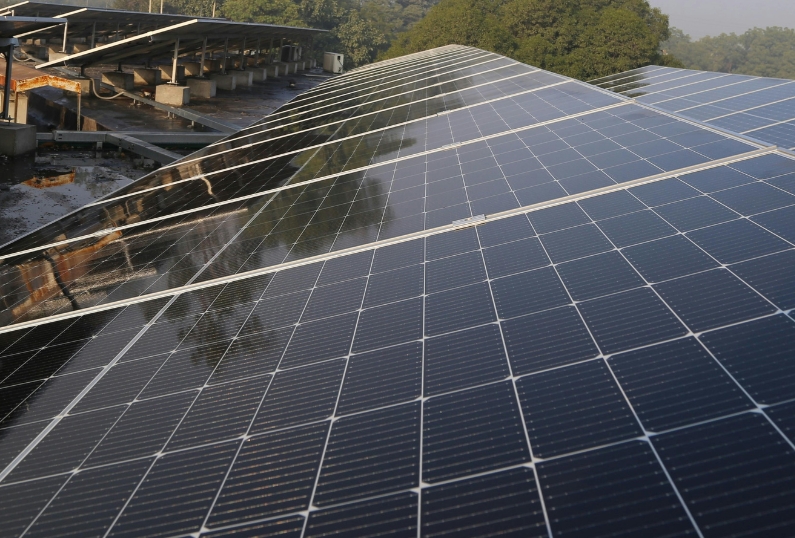
“We’ve Got Solar Panels — So Why Monitor Anything?”
This is one of the most common responses we hear when speaking to organisations about real-time utilities monitoring.
Solar panels are installed. Energy bills are lower. On the surface, the problem appears to be solved. But solar PV generation does not remove operational complexity; it simply changes where visibility is needed. In many cases, it actually makes monitoring more important for solar ROI and operational health.
Solar Reduces Bills—It Doesn’t Create Visibility
Solar panels are excellent at generating electricity, but they are a “black box” without secondary data. To truly optimise self-consumption, you need to know:
- How energy is being used the moment it’s generated.
- Which specific systems are driving peak demand?
- Whether the extraction, ventilation, or heating is operating efficiently.
- How operational behaviour changes during low-generation periods.
Without energy monitoring, solar can mask deep-seated inefficiencies. Low bills do not necessarily mean your facility is under control.
When Energy is “Cheap,” Behaviour Matters More
One unintended consequence of on-site generation is behavioural. When electricity feels abundant or “free,” discipline often slips:
- Equipment is left running longer than necessary.
- Standby loads and “vampire” power go ignored.
- Systems drift out of optimal operating patterns.
- Manual overrides on HVAC or extraction become permanent.
These issues rarely show up as a problem on an invoice, but they still accelerate asset degradation, increase the maintenance burden, and skew your carbon reporting accuracy.
Solar Doesn’t Monitor the Systems That Matter Most
In many environments, the most critical systems are not the ones people associate with energy savings:
- Dust extraction and ventilation.
- Air quality and VOC control.
- Compressed air networks (and hidden leaks).
- Temperature and humidity stability.
These systems run in the background and are rarely questioned unless they fail. Real-time energy monitoring allows organisations to verify that systems run only when required and detect mechanical degradation early, regardless of the size of the electricity bill.
Health, Safety, and Quality Don’t Disappear with Solar
Solar panels reduce grid dependency, but they do not reduce operational risk. Indoor air quality (IAQ), environmental conditions, and system performance still directly affect:
- Staff health and wellbeing.
- HSE and health & safety compliance.
- Product quality and material consistency.
In joinery and manufacturing, for example, wood dust, CO₂, and humidity remain critical risks. Monitoring provides the evidence of control required for auditors and insurers, which a solar inverter cannot provide.
Solar Complicates ESG Reporting Without Aligned Data
From an ESG and sustainability perspective, solar introduces new reporting complexities:
- Distinguishing between on-site generation vs. imported grid energy.
- Calculating Scope 2 emissions accurately.
- Proving real carbon reduction versus simple cost displacement.
Without reliable, meter-driven data, your sustainability reporting remains an estimate. Monitoring ensures that generation, consumption, and environmental conditions are understood as one cohesive story.
The Real Question is Not “Do We Need Energy Monitoring?”
The better question is: Do we have clear visibility of how our operation actually behaves, day to day?
In many cases, organisations with solar discover that:
- Energy cost was never the only risk—visibility was the missing piece.
- Monitoring reveals operational efficiencies far beyond simple power savings.
- Solar solves the supply part of the equation; monitoring solves the demand.
Solar Changes the Conversation—Monitoring Completes It
Real-time monitoring is not a response to high energy bills; it is a tool for operational control and risk reduction. Solar panels generate electricity, but monitoring generates the understanding needed to run a world-class operation.
In Summary
Having solar panels is a positive step toward net-zero, but it does not eliminate the need for visibility. In many organisations, solar is the exact moment when monitoring becomes most valuable, because energy cost is no longer the only signal worth paying attention to.
Monitoring is not about chasing savings; it is about knowing what is really happening.
Get in touch today or book a demo to understand more about energy monitoring and how you can start saving.