
Most organisations believe their systems are performing as intended.
Equipment has been installed correctly.
Controls are in place.
Maintenance schedules are followed.
No one is complaining.
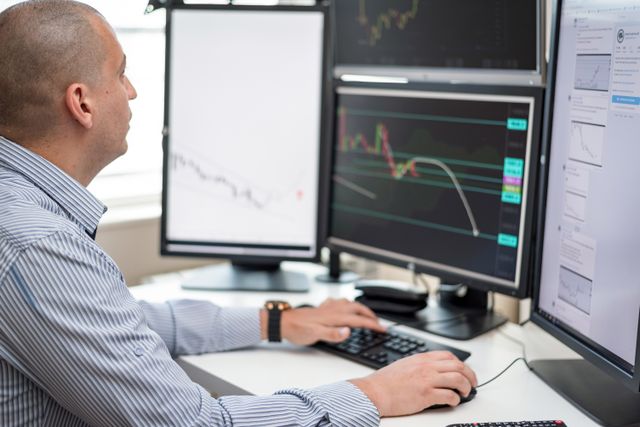
Real-time monitoring helps organisations verify that equipment, infrastructure and environmental conditions are performing as intended. Without continuous monitoring, businesses often rely on assumptions rather than evidence, allowing gradual performance drift to increase operational risk, maintenance costs and equipment wear.
On the surface, everything appears fine. But assumed performance is one of the most expensive and risky positions an organisation can take, precisely because problems develop quietly.
Why Assumed Performance Creates Hidden Operational Risk
Assumed performance feels safe because nothing is “wrong” but when systems fail catastrophically, the issue is obvious.
Assumed performance exists in the opposite space:
- Nothing has broken
- No alarms are firing
- No one has raised a concern
- Costs appear stable
This creates a sense of comfort. In reality, it often means issues are developing slowly and invisibly.
Continuous Monitoring Detects Performance Drift Early
Very few operational systems stop working overnight.
Instead, they drift:
- Fans lose efficiency
- Filters clog gradually
- Sensors age
- Controls are overridden and forgotten
- Usage patterns change
Each change is small. Individually, they appear insignificant.
Over time, they combine into:
- Reduced effectiveness
- Increased risk
- Higher wear and tear
- Loss of control
Without monitoring, drift goes unnoticed.
Real-Time Monitoring Replaces Assumptions with Evidence
Assumption replaces evidence surprisingly quickly. After installation and commissioning, organisations often move from evidence to assumption:
- “It was checked last year.”
- “It’s always worked.”
- “We would know if there was a problem.”
These assumptions are rarely tested until something goes wrong. Real-time monitoring continuously tests assumptions against reality.
Hidden Costs of Poor System Performance
The cost of assumed performance does not always show up as a higher energy cost and is rarely visible on a bill.
Instead, it appears as:
- Increased maintenance frequency
- Shortened asset life
- Gradual decline in working conditions
- Inconsistent quality
- Rising risk exposure
These costs are absorbed quietly across operations. By the time they are noticed, corrective action is often expensive.
Real-time Monitoring Reveals Problems People Learn to Ignore
One of the most dangerous aspects of assumed performance is human adaptation. People adapt to poor performance faster than systems improve.
When conditions degrade slowly:
- Staff adjust expectations
- Workarounds become normal
- Temporary fixes become permanent
- Poor performance is tolerated
This masks issues further and delays intervention. Real-time monitoring provides an objective reference point that cuts through adaptation.
Performance Monitoring Improves Accountability
Assumed performance weakens accountability. When performance is assumed:
- Responsibility becomes unclear
- Issues are hard to trace
- Decisions rely on opinion rather than evidence
Monitoring restores accountability by making performance visible and measurable.
Conversations change from:
- “I think it’s fine”
to - “The data shows a change.”
Verified Performance Creates Operational Control
Control is not achieved through installation, policy or intention.
It exists only where:
- Conditions are measured
- Performance is verified
- Deviations are identified
- Action is taken
Without verification, control is assumed. Assumed control is not control.
Monitoring replaces assumption with confidence
Real-time monitoring does not exist to highlight failure.
Its real value is in confirming that:
- Systems are operating as expected
- Conditions are stable
- Changes are intentional
- Performance is maintained
This creates confidence, not just reassurance.
In summary
Assumed performance is comfortable, but costly.
It allows:
- Drift to go unnoticed
- Risk to accumulate
- Issues to surface late
- Decisions to rely on belief rather than evidence
Real-time monitoring replaces assumption with visibility and confidence. It gives organisations continuous visibility into equipment, environmental conditions and operational performance. Rather than relying on assumptions, businesses can detect performance drift early, support predictive maintenance and make evidence-based decisions that improve reliability, reduce operational risk and extend asset life.
Systems do not need to fail to create risk, they only need to drift. Monitoring is how organisations see that drift and act before it matters.
If you want to move from guesswork to data-driven control and real-time monitoring, get in touch with DSE Monitoring today.