
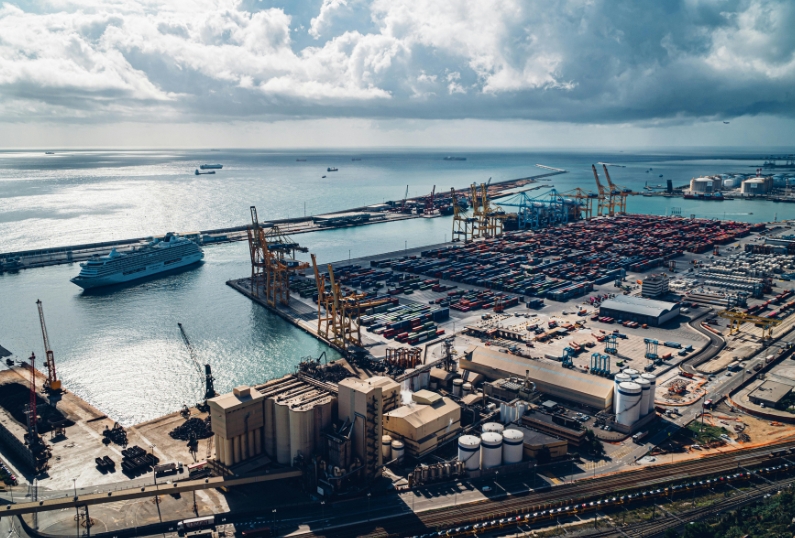
Ports and harbours are complex environments. They combine industrial operations, tenant-managed facilities, visiting vessels, public infrastructure, and energy-intensive assets, all operating on different timelines and cost models.
Despite this complexity, one thing is consistent across every smart port we work with: the need for accurate, real-time data on utility consumption to drive port sustainability and operational efficiency.
At DSE Monitoring, we collect true data from the installations and equipment that matter most to your maritime operation. By transforming raw consumption into actionable insights, we help ports transition toward greener operations while simplifying complex billing cycles.
Utilities Monitoring That Fits the Way Ports Actually Operate
1. Accurate measurement for Shore Power and Visiting Vessels
One of the most common challenges in maritime hubs is billing visiting vessels and temporary connections accurately. As shore-to-ship power becomes a standard for reducing emissions, precise tracking is essential.
With real-time energy monitoring installed on pier locations and outlets, ports can automatically record the exact consumption for electricity and water from arrival to departure.
- Precision: If a vessel stays for 3 days and 4 hours, the system captures that exact window.
- Speed: Data is immediately available, allowing the port to issue an invoice the moment the vessel departs.
- Transparency: Eliminate estimates and manual meter readings, reducing billing disputes and improving customer trust.
2. Automated Billing for Long-Term Port Tenants
Most ports host a variety of permanent tenants: warehouses, logistics operators, processors, and service companies. To support port decarbonisation, these tenants must be accountable for their own footprints.
DSE Monitoring allows ports to:
- Collect utility consumption data automatically.
- Allocate costs precisely per tenant or sub-meter.
- Invoice monthly based on real usage rather than square footage estimates. This is particularly valuable where energy prices fluctuate or where tenants expand their operations over time.
3. Full Visibility of Port Operational Costs & ESG Goals
Beyond billing, ports are large-scale energy consumers. To meet sustainability reporting requirements and ESG targets, visibility into the port’s own cost base is required. We routinely monitor:
- Heat pumps and climate control in port buildings.
- High-intensity lighting and crane operations.
- Ice production and cold storage for seafood operations.
- Pumps and specialised maritime equipment.
Real-time data allows operators to detect leaks or over-consumption immediately, identify inefficient machinery, and provide the “hard data” required for port sustainability audits.
A Real-World Case Study: Port of Odense
The Port of Odense is a prime example of how wireless energy monitoring supports a large-scale green port initiative. Onboarded in 2024 to replace a restrictive, cabled system, the port now manages a highly scalable network.
The Odense Harbour Setup:
- 785 measuring points across the entire harbour.
- Multi-utility monitoring: Electricity, water, and district heating.
- Diverse Assets: Monitoring for cranes, painting facilities, lighting, and container hire outlets.
- Rapid Rollout: Using a LoRaWAN-based wireless gateway, 65 Modbus-to-LoRa units were live within weeks with zero disruption to IT security or port operations.
The system has become their primary operational portal, proving that even the largest ports can achieve digital transformation quickly.
Ports Are Not as “Unique” as They Think
While every harbour has its own layout, the fundamentals of energy management remain the same:
- Measure what matters.
- Collect true, real-time data.
- Apply that data to billing, cost control, and carbon reduction strategies.
Whether you are managing temporary vessel connections or energy-intensive infrastructure, the same platform supports the entire ecosystem.
Supporting Expansion, Not Restricting It
One of the biggest advantages of wireless utility monitoring is that it doesn’t limit growth. As ports expand with new piers, deeper berths, or new warehouses, additional meters can be added in minutes. The data appears immediately in the existing platform, providing a future-proof foundation for the smart ports of tomorrow. If you would like more information, get in touch today or book a demo.